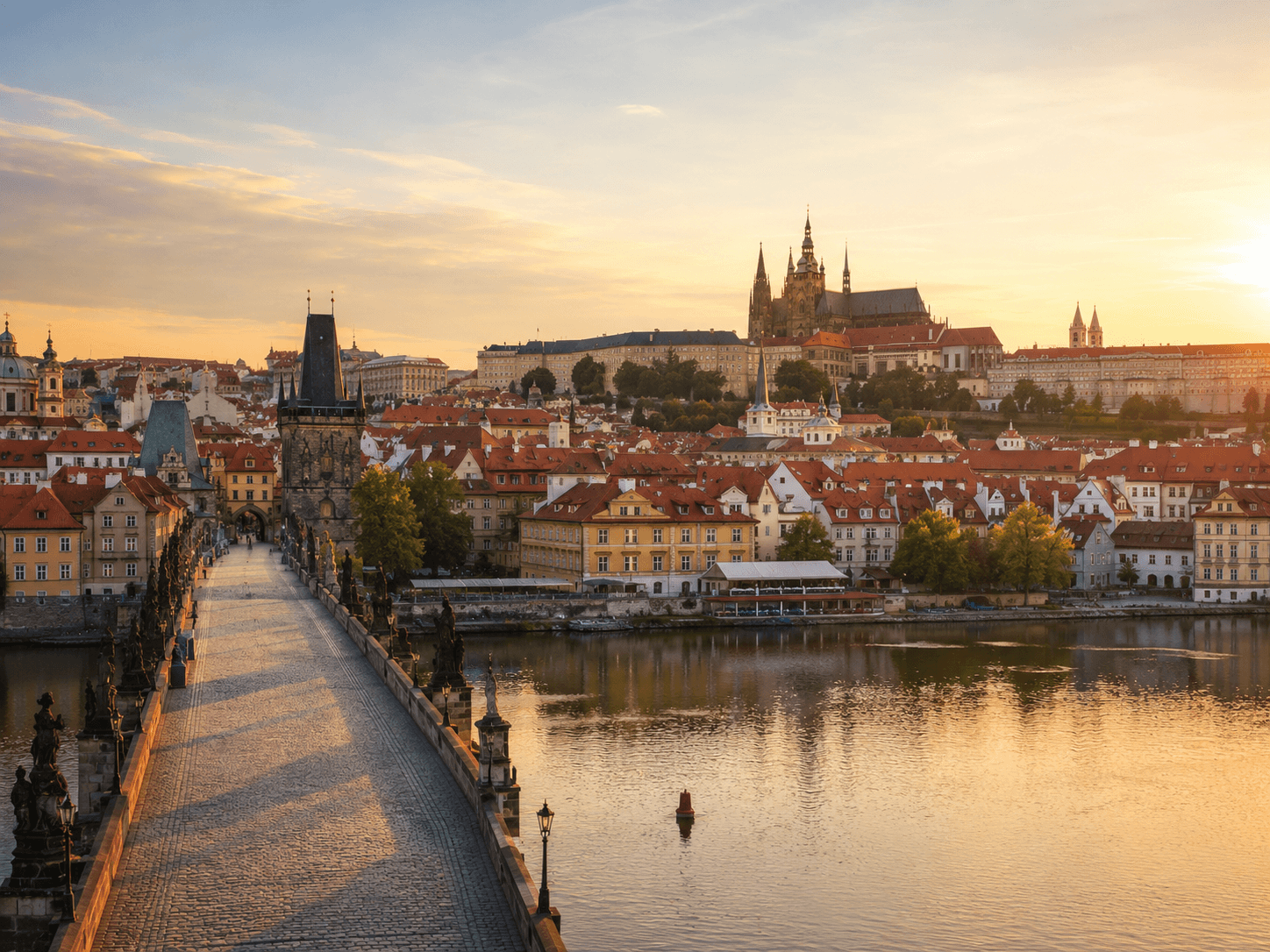
Prague occupies a fascinating position in European cannabis culture. The Czech Republic has some of the most progressive cannabis policies on the continent — personal possession has been decriminalised for years, home cultivation is now legal up to defined limits, and a regulated cannabis market is actively being developed. For travellers, Prague is a city where the scene is real, the culture is genuine, and the pace is exactly right.
The legal landscape in 2026
Czech Republic has had one of Europe's most tolerant cannabis policies for over a decade. Personal possession of up to 10 grams is a civil offence carrying a fine of up to 15,000 CZK — not a criminal charge and not a record. In practice, police in Prague rarely enforce even this, particularly in areas with an established cannabis culture.
Home cultivation of up to two plants became legal in 2025 following a parliamentary vote, making the Czech Republic one of a small number of European countries where personal growing is explicitly permitted. This has given the emerging social club scene a more solid legal foundation than Barcelona's clubs — members can legitimately contribute home-grown cannabis to a collective.
A full regulatory framework for cannabis retail is under active parliamentary discussion and is expected to pass in some form before 2027. Prague may well join Amsterdam as a city with genuine, licensed cannabis commerce within the next few years. The XRED EYEZ guide will be updated as this develops.
Prague's cannabis social clubs
Following the Barcelona model, a network of cannabis social clubs has grown in Prague over the past several years. These operate on the same private-association basis — members collectively cultivate and share cannabis on club premises, framed as a private activity between consenting adults.
The Prague club scene is younger and smaller than Barcelona's, and quality varies considerably. The better-established clubs in Žižkov and Vinohrady are well-organised, with proper menus, tested product and a genuine community atmosphere. Some newer clubs are less consistent.
Access follows the same introduction model as Barcelona. The XRED EYEZ Prague city guide lists vetted clubs with information on how to get access. As with all private club scenes, walk-in access is not possible and any service claiming to offer immediate tourist access without a proper introduction process should be treated with caution.
CBD shops as a starting point
Prague has an unusually high density of CBD shops — perhaps higher than any other European city. These are fully legal retail businesses selling CBD flower, oils, edibles and related products. They're openly signed, easily found and a legitimate part of the cannabis culture landscape.
For many travellers, CBD shops are the first point of contact with the scene. Staff at the better shops are knowledgeable, speak English, and can often provide introductions to cannabis social clubs for visitors who are clear about what they're looking for. This is one of the more reliable access routes for tourists.
CBD flower sold in these shops can be remarkably high quality — Czech cultivation standards are strong — and for travellers who prefer a non-intoxicating cannabis experience, Prague's CBD shops represent excellent value.
Best neighbourhoods for cannabis culture
Žižkov is Prague's most storied bohemian neighbourhood — hilly, slightly rough around the edges, full of pubs and independently-minded residents. It has the highest concentration of cannabis social clubs in the city and a cultural atmosphere that makes the whole scene feel natural rather than touristy. The neighbourhood's famous pub culture means you can move seamlessly between a bar and a club visit.
Vinohrady, directly adjacent to Žižkov, has a more refined character — tree-lined streets, art nouveau apartment buildings, upmarket restaurants. The clubs here tend to be better-fitted and more establishment-friendly. It's an excellent base for a longer stay in Prague.
Holešovice, north of the centre, is Prague's emerging creative quarter. A former industrial area now full of galleries, studios and independent venues, it has an authentically countercultural atmosphere and a growing number of cannabis-friendly venues.
Avoid the historic centre (Prague 1) for anything cannabis-related — it's heavily policed and any activity there attracts immediate attention.
Practical advice for visiting Prague
Prague is one of Europe's most affordable major cities, and the cannabis experience here reflects that. Quality is high and prices are lower than Amsterdam or Barcelona for comparable product.
The city is walkable and extremely well-served by tram and metro. Žižkov and Vinohrady are 15–20 minutes from the centre on foot or a short tram ride. The transport runs late, which suits the evening-oriented cannabis club scene.
English is widely spoken in the social clubs and CBD shops. Czech is worth a basic attempt — even a few words of greeting goes a long way in a local club atmosphere.
Bring cash. Prague's club scene runs almost entirely on cash transactions, and while the city has plenty of ATMs, using a local bank ATM (avoiding tourist exchange booths) gives significantly better rates.
Weather matters: Prague winters are cold and the city is at its best from April to October. The outdoor terrace culture that makes the city so enjoyable in summer disappears in winter — factor this into your planning if a relaxed outdoor cannabis culture experience matters to you.
What's coming next in Prague
Prague is one of the most interesting cannabis markets to watch in Europe right now. The combination of progressive legislation, a growing social club infrastructure, high-quality domestic cultivation and a city already attracting international cannabis tourists creates the conditions for a scene that could rival Amsterdam within five years.
XRED EYEZ will continue to expand its Prague coverage as the market develops, including new venue listings, neighbourhood guides and regulatory updates. If you're planning a trip and want current intel, the XRED EYEZ Prague city guide has the most up-to-date information on what's open and accessible.